
Exercise-induced extracellular vesicles enhance aged cartilage health via microRNA-29
A three-month aerobic program in older adults generated microRNA-29-loaded vesicles that boosted Klotho expression and enhanced cartilage health in mice.
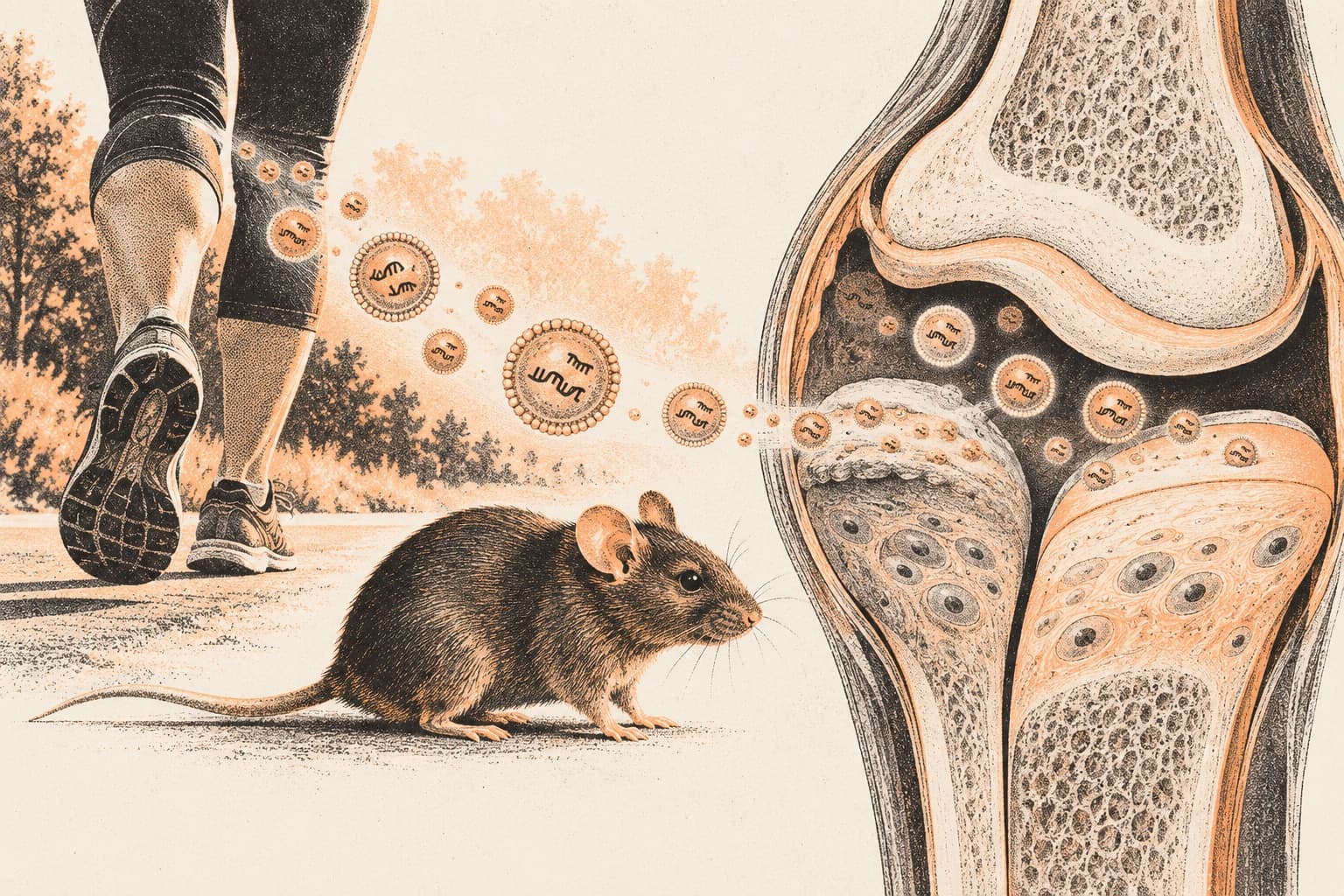
In a study of older adults and aged mice, researchers investigated how exercise-derived extracellular vesicles influence joint tissue during aging. Network analyses first identified microRNA-29 as an exercise-responsive regulator of cellular aging in cartilage. Following a three-month aerobic exercise intervention in older human adults, circulating extracellular vesicles contained increased levels of microRNA-29 compared to baseline. In cell culture, these exercise-primed vesicles epigenetically de-repressed the KL gene, which encodes the longevity factor α-Klotho, and restored a more youthful phenotype in aged chondrocytes. Vesicles engineered with microRNA-29 reproduced these anabolic effects through a KL-dependent pathway. Delivering exercise-primed vesicles directly into the joints of aged mice enhanced cartilage health.
Why it matters
This work identifies a specific mechanism by which exercise conveys systemic signals to distal tissues, linking vesicle-delivered microRNAs directly to the regulation of the longevity-associated protein α-Klotho.
Caveats
The abstract does not report participant sample sizes or clinical joint outcomes in humans, and in vivo tissue health was evaluated only in aged mice.
- Aerobic exercise
- Exercise-primed extracellular vesicles
- MICRORNA-29-ENGINEERED extracellular vesicles
- Altered intercellular communication
- Epigenetic alterations
- Klotho–FGF23 axis
- KL
- MIR29A
- microRNA-29
- Homo sapiens
- Mus musculus
The paper
Exercise enhances aged chondrocyte health through microRNA-29-enriched extracellular vesicles
Iijima H, Dave KM, Wang K et al.
Nature Aging · 29 Sep 2026