Figure 1
Figure 1From EMBO Molecular Medicine
Cellular senescenceAnimals

Prostaglandin E2 drives cellular senescence and scar fibrosis after cesarean section in mice

Blocking the prostaglandin E2 pathway or targeting cellular senescence reduces uterine scarring and improves tissue repair in mouse models of cesarean defects.

EMBO Molecular Medicine

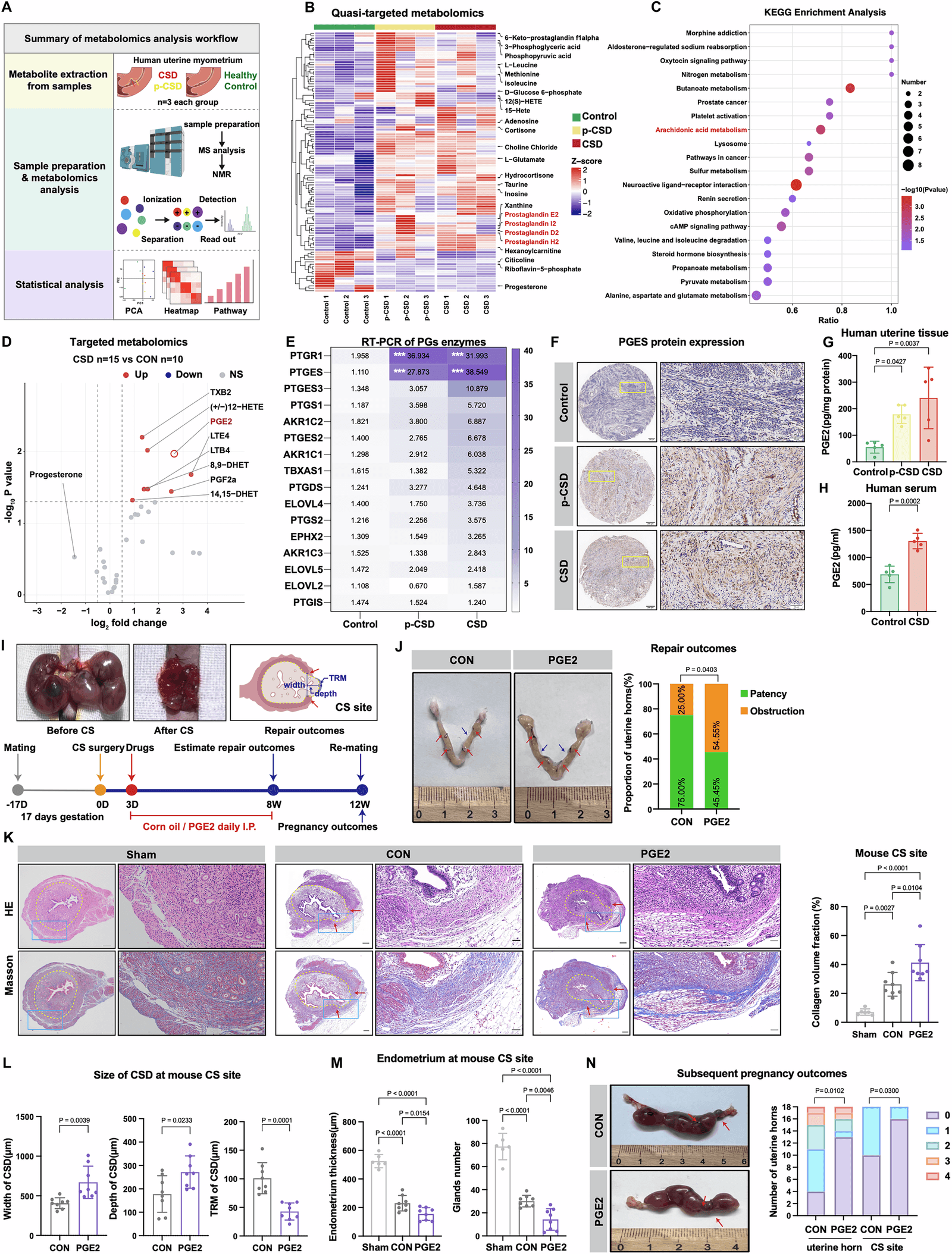
In a new mouse model of cesarean section scar defects, researchers investigated the mechanisms that disrupt uterine healing. The team combined metabolomics, transcriptomics, and functional assays to track scar formation. They found that increased activity of the PGES and prostaglandin E2 (PGE2) axis drives pathological tissue remodeling. High PGE2 levels trigger early senescence in macrophages. These senescent immune cells then relay pro-senescent signals to uterine fibroblasts through the IL-1β/IL-1R signaling pathway. This cellular relay prompts persistent fibroblast activation and progressive fibrosis, damaging the structure and function of the uterus. When investigators blocked the PGES/PGE2 pathway or applied anti-aging strategies in mice, fibrotic scarring decreased significantly. These interventions restored coordinated healing across both myometrial and endometrial layers of the uterus.

Why it matters

The study reveals how localized tissue injury can trigger a macrophage-to-fibroblast senescence cascade that fuels pathogenic fibrosis. It indicates that anti-senescence strategies may help treat wound-healing failures beyond general organismal aging.

Caveats

The research was conducted exclusively in mice and cell assays, so results may not translate directly to humans. Specific therapeutic compounds and clinical safety profiles were not evaluated in patient populations.

The paper

Prostaglandin E2-mediated aging microenvironment fuels pathogenic fibrosis in cesarean section scar defect

Yin Y, Chen H, Xie W et al.

EMBO Molecular Medicine · 2 Oct 2026
See all
Nature MetabolismHuman trial

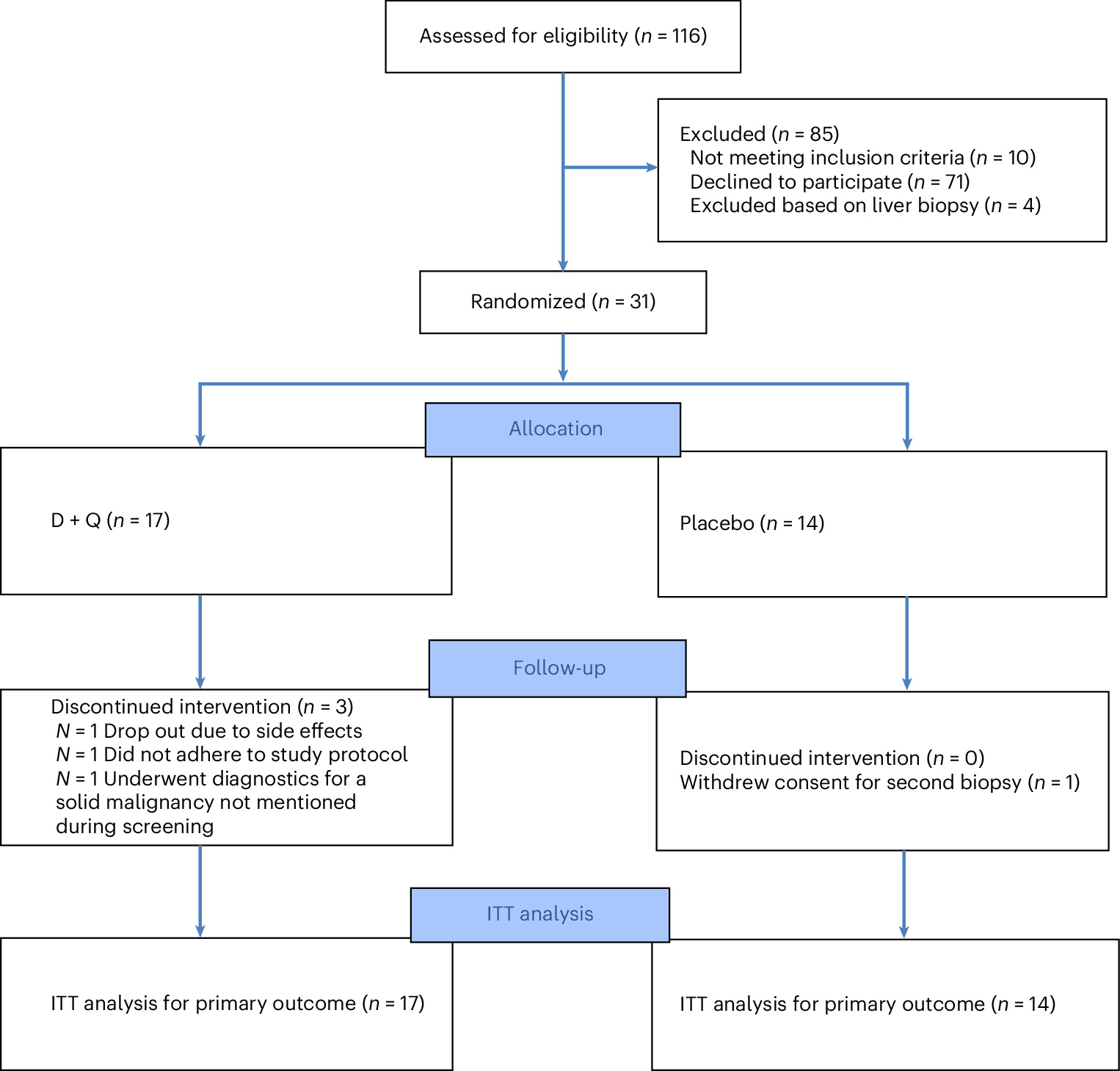
Dasatinib and quercetin reduce liver fibrosis in a phase-2 MASH trial

The senolytic combination improved liver fibrosis without disease worsening in nearly half of treated participants while lowering cellular senescence…The senolytic combination improved liver fibrosis without disease worsening in nearly half of treated participants while lowering cellular senescence markers. In a phase-2 randomized controlled trial, 31 human participants with fibrotic metabolic dysfunction-associated steatohepatitis…

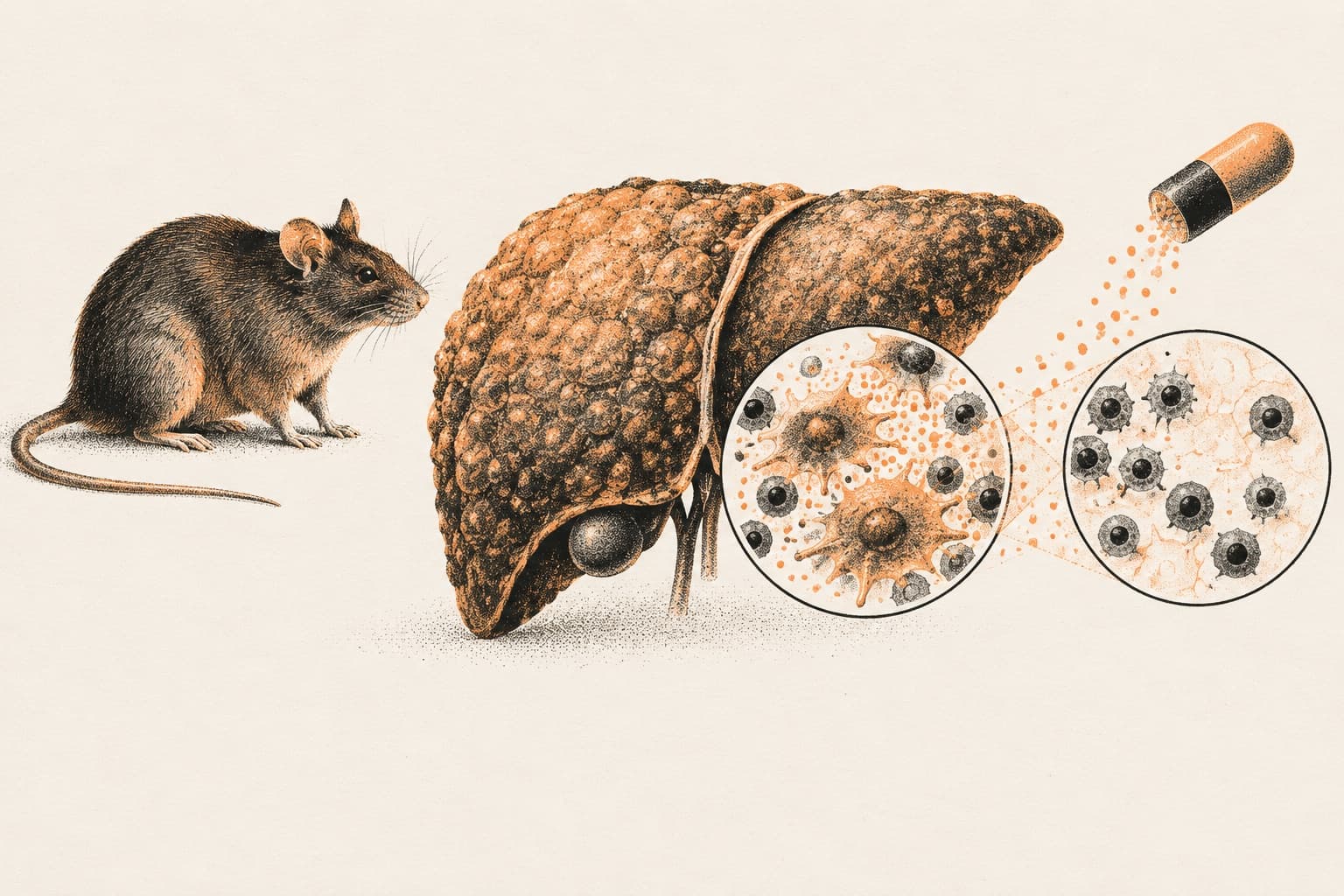
Figure 1
bioRxivAnimalsPreprint

A distinct p21-driven macrophage senotype accumulates during aging and liver disease

Researchers identified a p53-p21-Cyclin D2 axis that governs senescent macrophages in mice and human liver cirrhosis and can be cleared with…Researchers identified a p53-p21-Cyclin D2 axis that governs senescent macrophages in mice and human liver cirrhosis and can be cleared with senolytics. In a preprint analyzing mice and human liver cirrhosis tissue, researchers investigated a distinct macrophage senotype characterized by…

medRxivHumansPreprint

DNA methylation proxies of senescence markers track human disease and mortality

The new blood-based tools estimate senescence gene activity to predict incident diseases, all-cause mortality, and clinical treatment responses.The new blood-based tools estimate senescence gene activity to predict incident diseases, all-cause mortality, and clinical treatment responses. In a preprint analyzing 18,859 human participants from the Generation Scotland cohort, researchers evaluated Methylation-associated Gene…

Aging CellAnimals

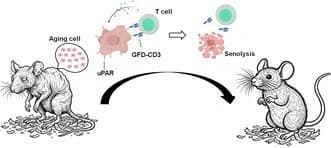
Bispecific T cell engager eliminates senescent cells in mice and nonhuman primates

Monitored by serum transaminase levels, low doses of the drug alleviated age-related pathologies without causing the hepatotoxicity seen at higher…Monitored by serum transaminase levels, low doses of the drug alleviated age-related pathologies without causing the hepatotoxicity seen at higher doses. In aged mice and non-human primates, a newly designed bispecific T-cell engager safely eliminated senescent cells and improved…

Graphical abstract
Aging CellHuman trial

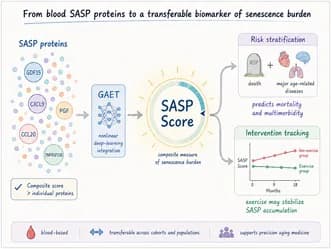
A deep learning score for cellular senescence predicts human mortality and disease risk

The proteomic biomarker tracked chronic illness risk in the UK Biobank and shifted following an 18-month multimodal exercise intervention.The proteomic biomarker tracked chronic illness risk in the UK Biobank and shifted following an 18-month multimodal exercise intervention. In human participants from the UK Biobank and an independent randomized clinical trial, researchers developed and validated a deep learning biomarker…

Graphical abstract