
Restoring HIRA chromatin maintenance improves aged mouse oocyte quality
Preventing HIRA SUMOylation rescues histone replacement, restoring chromatin integrity and developmental potential in aging mouse eggs.
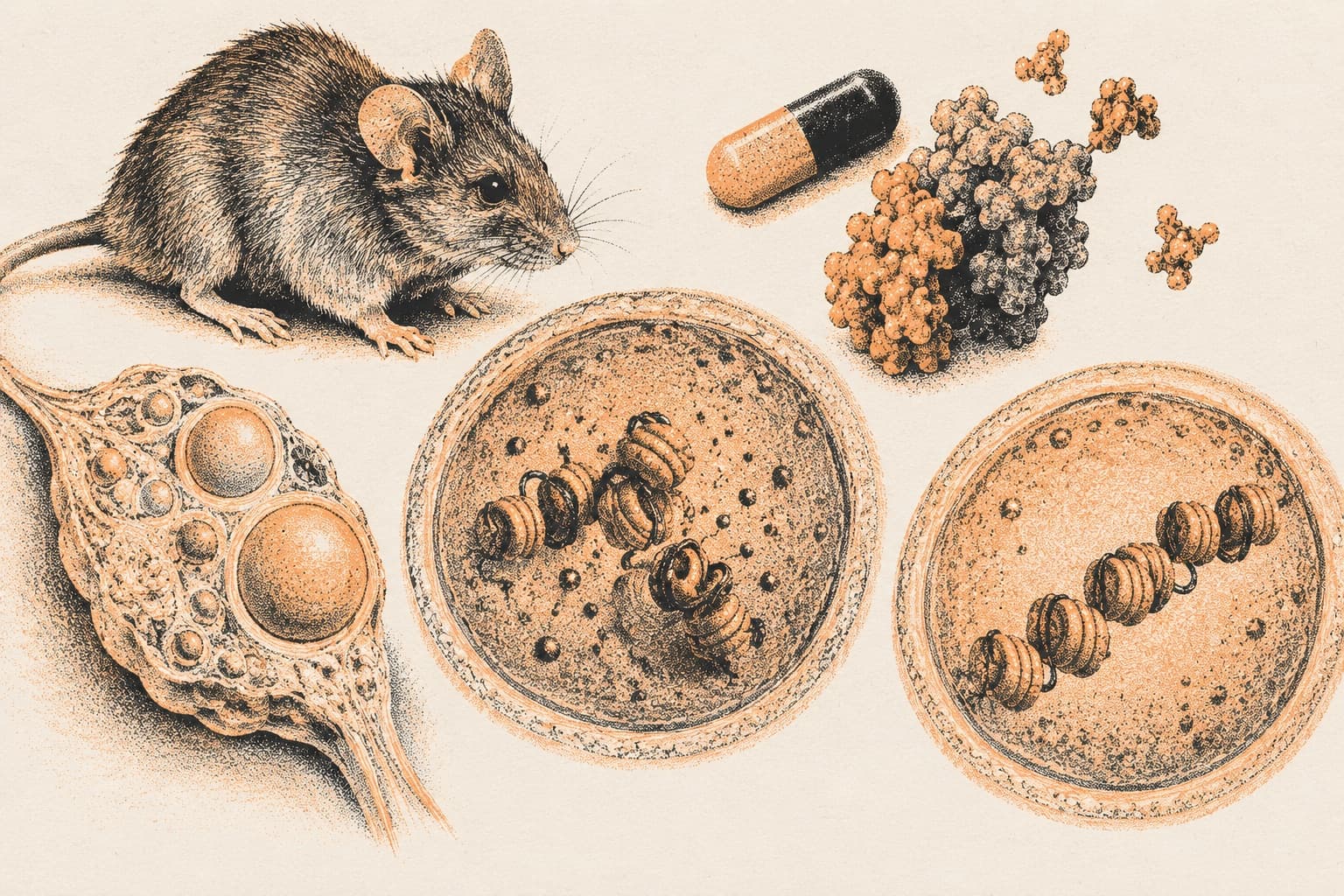
In mice, age-related fertility decline involves defective chromatin maintenance, according to a new preprint. Researchers found that HIRA-driven H3.3 histone replacement decreases as mouse oocytes age, causing a breakdown in chromatin homeostasis. This decline occurs because HIRA undergoes SUMOylation, which disrupts the HIRA-UBN1-CABIN1 complex and detaches it from chromatin. Preventing HIRA SUMOylation restored H3.3 incorporation and maintained chromatin integrity in aged mouse oocytes. This rescue improved both oocyte maturation and preimplantation development rates. The authors also observed a similar loss of chromatin homeostasis in aging human oocytes, indicating the process may be conserved.
Why it matters
The findings define a specific molecular pathway driving reproductive aging through altered histone replacement. Modulating chromatin integrity pathways could provide fresh targets to address age-associated declines in female fertility.
Caveats
This work is a preprint and has not yet been peer-reviewed. Interventions to prevent HIRA SUMOylation were tested only in mice, meaning therapeutic relevance in humans remains unverified.
- Prevention of hira sumoylation
- Epigenetic alterations
- Genomic instability
- DNA damage response
- Histone modification and chromatin remodelling
- Cabin1
- H3-3a
- Hira
- Ubn1
- Homo sapiens
- Mus musculus
The paper
Defective HIRA driven chromatin maintenance underlies age related decline in oocyte quality
Hatanaka Y, Takeda Y, Hannam M et al.
bioRxiv · 29 Sep 2026 · Preprint, not yet peer-reviewed